



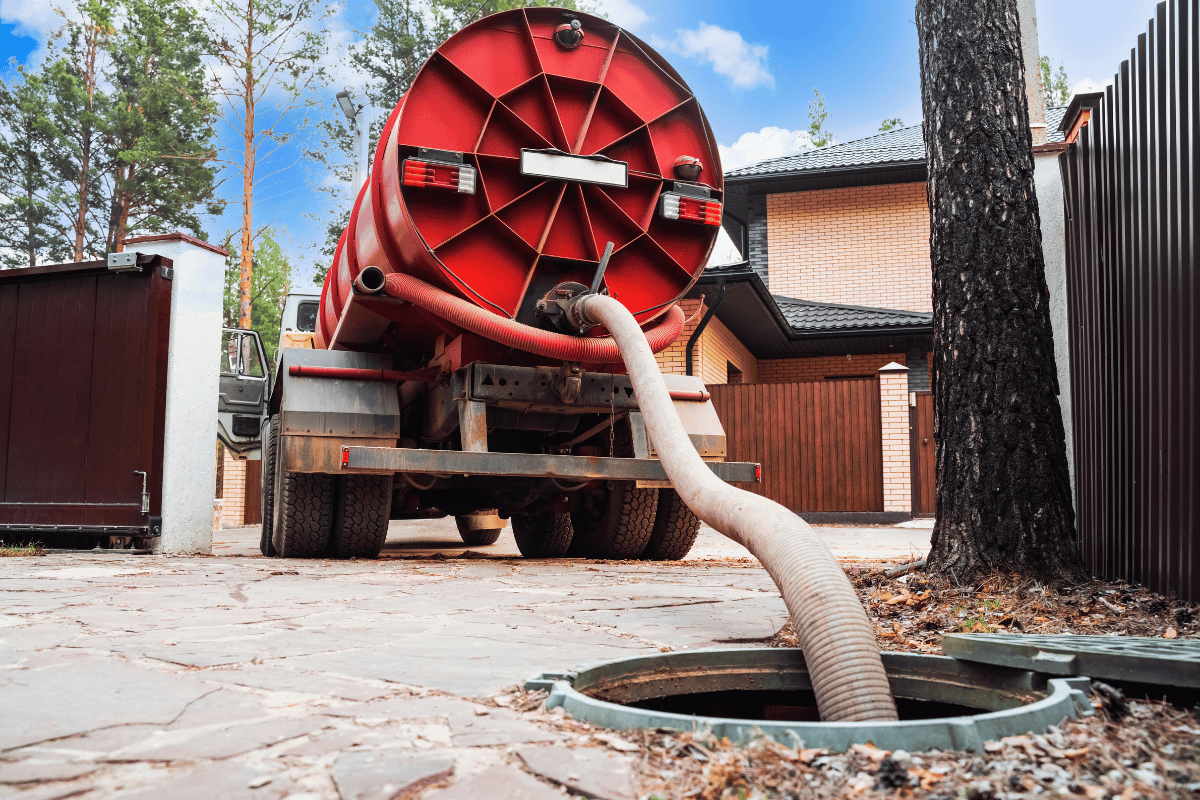
If you are asking can you pump out a septic tank yourself, the practical answer for most Washington homeowners is no. This job involves raw sewage, hazardous gases, heavy solids, regulated waste disposal, and an open underground tank. Getting liquid out is only one part of doing the work correctly.
A homeowner may already have a trash pump, tractor, hoses, or other equipment and think a DIY septic job could save money. The problem is that professional pumping is designed to remove sludge and scum, transport the waste safely, and give a trained technician a chance to spot problems while the tank is accessible.
What Should You Know Before Trying to Pump a Septic Tank?
- Never enter a tank or lean into an open access point.
- A trash pump is not a substitute for a vacuum truck.
- Removing only easy-to-move liquid can leave dense solids behind.
- Septage must be contained, transported, and disposed of correctly.
- Baffles, filters, lids, leaks, and liquid levels should be checked during service.
- Local rules may require approved or certified professionals and service reporting.
Why a DIY Pump-Out Is More Complicated Than It Looks
Inside the tank, floating scum sits above liquid effluent while heavier sludge settles at the bottom. The purpose of a pump-out is not simply to lower the liquid level. Accumulated solids need to be removed before they interfere with treatment or move toward the drainfield.
Small pumps may move liquid but struggle with dense sludge. Improvised hoses and open containers increase exposure. Then there is disposal. Septage cannot simply be released onto soil, into a storm drain, or elsewhere on the property.
| DIY idea | The practical problem |
|---|---|
| Use a trash pump | It can clog, leave sludge behind, and increase exposure |
| Remove only liquid | The solids driving the pumping need remain |
| Open the tank carelessly | Unsafe lids, falls, and gases create serious risks |
| Dump waste on the property | Sewage can create health and environmental contamination |
| Skip the system check | Damage to baffles, filters, lines, or other parts can be missed |
How Do You Know When the Tank Should Be Pumped?
Three to five years is a common planning range, but it is not a rule for every home. Household size, water use, tank capacity, garbage disposal use, and the amount of solids entering the system all affect the schedule.
Pierce County guidance says a tank should be pumped when combined sludge and scum reach about one-third of tank capacity. Thurston County also bases the need to pump on measured buildup. That is more useful than automatically servicing every property at the same interval.
Call sooner if you do not know the last service date, an inspection shows high sludge levels, several drains are slowing at once, sewage is backing up, or wastewater is surfacing near the drainfield.
If can you pump out a septic tank yourself comes to mind because the home is already backing up, avoid improvising. A system backup may involve the tank, but it can also point to a clogged line, failed pump, or drainfield problem.
What Can a Homeowner Safely Do Instead?
You can do quite a lot without handling septage. Keep service and inspection records, know where your septic tank and drainfield are located, keep access areas clear, repair leaking fixtures, spread laundry loads across the week, and limit garbage disposal use.
Watch for multiple slow drains, gurgling, odors, wet ground, or an alarm. These clues help a professional determine whether you need routine service or troubleshooting.
Some Washington jurisdictions allow trained homeowners to perform limited self-inspections on qualifying systems. That does not mean self-inspection automatically authorizes a homeowner to haul and dispose of septage. Washington requires septic pumpers to be approved locally, and King County limits system work and maintenance to properly certified or licensed individuals. Check local requirements before doing work around an open tank.
What Does Professional Tank Pumping Actually Include?
Professional service requires safe access, equipment capable of handling liquid and solids, secure containment, transportation, and approved disposal. A technician can also note sludge levels, tank condition, baffles, filters, or signs that another component deserves attention.
Having the tank pumped does not fix every wastewater problem. A failed drainfield, damaged baffle, blocked pipe, or malfunctioning pump needs its own diagnosis.
For homeowners asking can you pump out a septic tank yourself, that is the real difference. You are paying for safer handling, more complete removal, proper disposal, useful system observations, and a maintenance record.
Local Pump-Out Help From All Septic & Sewer
All Septic & Sewer serves homeowners and businesses across Pierce, Thurston, and South King County with septic services including pump-outs, inspections, repairs, installations, and drainfield work. The Puyallup-based company was founded in 2017 by Robert Eacrett and Jeremy Moore and brings more than 20 years of combined industry experience. The team emphasizes clear communication, practical recommendations, and work that follows Washington and local health requirements.
When a tank is overdue, records are unclear, or a backup has started, the first step is to identify what the septic system actually needs. Sometimes that is routine service. Other times, an inspection or troubleshooting finds a problem that emptying the tank alone would not solve.
Why Choose All Septic & Sewer?
- Locally owned and operated in Puyallup
- More than 20 years of combined experience
- Licensed and bonded Washington contractor
- Contractor license ALLSESS831LL
- Advanced modern equipment
- Leadership with county O&M, installer, and wastewater design credentials
Schedule Service Before a Maintenance Issue Becomes a Backup
All Septic & Sewer
Phone: ((888) 469-8606
Service area: Pierce County, South King County, and Thurston County, including Puyallup, Tacoma, Bonney Lake, Auburn, Federal Way, Kent, Lacey, Olympia, Tumwater, Yelm, and surrounding communities.
If you are still asking can you pump out a septic tank yourself because service is due, call All Septic & Sewer before a manageable maintenance need turns into a backup.
Frequently Asked Questions
Can I use a trash pump to empty my septic tank?
No. A trash pump is not a replacement for vacuum equipment designed to remove and contain septage, especially dense solids at the bottom.
Is a septic tank supposed to look full after service?
Yes. Once normal use resumes, wastewater rises to the tank’s operating level, so a full-looking tank does not automatically mean it needs service again.
Do I need to add bacteria after the tank is emptied?
Usually no. Normal household wastewater supplies bacteria, and additives do not replace proper inspection or maintenance.
Can a pump-out fix a backup?
Sometimes, but not always. A backup can also come from a blocked line, failed pump, or drainfield issue that needs diagnosis.
How long can a septic tank go without being emptied?
Many homes fall around three to five years, but the right interval depends on household use, tank size, water volume, and measured solids.