



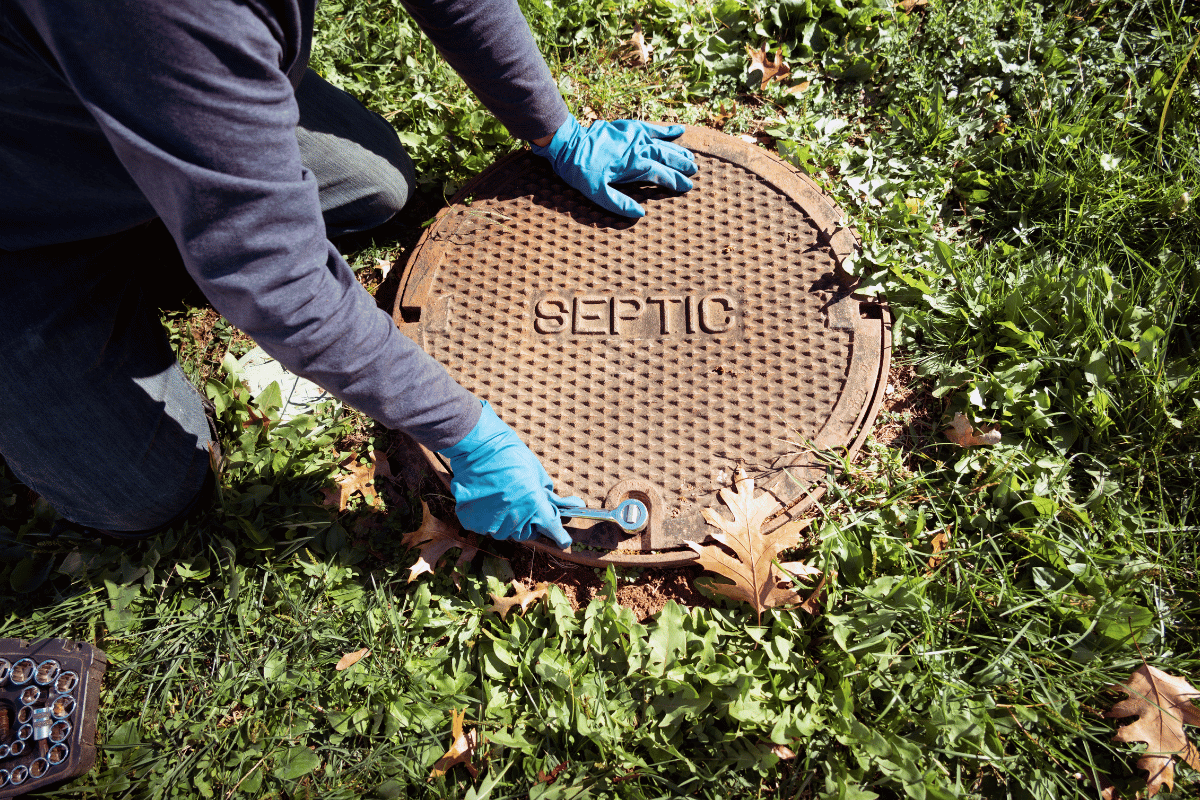
If you are asking does a septic tank need a vent, the practical answer is yes. A septic system needs a safe path for gases to escape and pressure to equalize. What many homeowners do not realize is that this does not always mean a separate pipe sticking out of the tank. In many homes, the plumbing stack that exits above the building handles this job.
What Homeowners Should Know About Septic Venting
- A septic system needs controlled airflow for proper functioning.
- A visible pipe beside the tank is not required on every design.
- The home’s plumbing stack may provide the main outlet for tank air.
- Gurgling, slow drainage, or new sewer odor can signal an airflow problem, but may also indicate a clog or wastewater failure.
- Leaves, debris, nesting material, and freezing conditions can obstruct an outlet.
- Never cap an opening simply to stop an odor. The cause should be diagnosed first.
Where Does a Septic System Release Gases?
A conventional setup connects household drains to the treatment chamber. As wastewater enters, gases and displaced air need somewhere to go. On many properties, that path continues back through the plumbing and exits through a roof vent.
This is the detail many simplified articles miss. A safe outlet is necessary, but a separate tank vent is not automatically required on every property. Some designs also use air vents near treatment components, the drain field, or a pump chamber.
Washington rules show why the design matters. For certain pumping chambers, venting may be handled through approved building plumbing or through a direct outlet of at least two inches to the atmosphere. The actual system design matters. That is why adding a new line without understanding the existing layout is not a good DIY fix.
How Can a Blocked Vent Pipe Affect the System?
A vent pipe helps air move as wastewater moves. If that route becomes restricted, pressure changes may show up as gurgling fixtures, unusual odors, or poor drainage.
The important point is that these symptoms are not proof of one specific problem. A clogged line, overloaded chamber, damaged pipe, or drain field issue can create similar signs. Good troubleshooting checks the entire septic system instead of assuming the outlet is the only cause.
| What you notice | What it could mean | Sensible next step |
|---|---|---|
| Toilet gurgles after draining | Restricted airflow or a clog | Check the plumbing and septic components |
| New sewer odor | Gas is not dispersing normally | Inspect the outlet and traps |
| Several slow drains | Larger drainage problem | Arrange a septic inspection |
| Odor near the field | Wastewater or airflow issue | Have the area professionally checked |
Why Can You Smell Septic Gas Outside?
Some odor can occasionally be noticeable where gases are designed to leave the home. Strong, persistent, or suddenly new odor deserves attention. Debris, poor airflow, a dry plumbing trap, or a problem elsewhere in the wastewater system may be involved.
Wind direction can also carry odor toward windows or outdoor living areas. Do not respond by sealing the outlet or pouring cleaning chemicals into it. A vent is essential, and restricting it can move the problem rather than solve it.
Should You Clean or Modify the Outlet Yourself?
You can look for obvious debris around an accessible ground-level opening, but avoid climbing onto the building or opening a wastewater chamber. Sewage gases, fall risks, and confined spaces make deeper inspection a job for trained professionals.
Routine septic maintenance helps too. The U.S. EPA says an average household septic system should be inspected at least every three years, while household tanks are typically pumped every three to five years. Alternative systems with pumps or mechanical components often need more frequent attention.
So, does a septic tank need a vent when there is already a plumbing stack? The better question is whether the complete airflow path is working as designed. An inspection can confirm that without unnecessary changes.
When to Bring in All Septic & Sewer
All Septic & Sewer handles inspections, pumping, repairs, installations, and drain field troubleshooting across Pierce, Thurston, and South King County. When a customer reports odor, gurgling, or slow drains, the useful approach is to look at how the whole setup is operating and identify whether the problem comes from airflow, a blockage, solids buildup, or another component.
The company is locally owned and operated in the Puyallup area. Robert Eacrett and Jeremy Moore founded the business in 2017, and the team brings more than 20 years of combined industry experience. Jeremy is a Washington State On-Site Wastewater Treatment System Designer and holds installer and O&M specialist certifications in the counties served.
Why property owners choose All Septic & Sewer:
- Locally owned and operated
- Veteran-owned company
- More than 20 years of combined experience
- Licensed and bonded wastewater services
- Inspection, pumping, repair, installation, and drain field expertise
- Advanced modern equipment and local county knowledge
Contact All Septic & Sewer
All Septic & Sewer
Phone: (888) 469-8606
Service areas include communities across Pierce County, South King County, and Thurston County, including Puyallup, Tacoma, Bonney Lake, Gig Harbor, Auburn, Kent, Federal Way, Lacey, Olympia, Tumwater, Yelm, and nearby areas.
If odor, gurgling drains, or slow drainage has you wondering does a septic tank need a vent, schedule service with All Septic & Sewer so the actual cause can be identified before the problem gets worse.
Frequently Asked Questions
Can I Add a Separate Outlet to My Septic Tank?
Not before confirming the original design. Adding or relocating an outlet can change airflow and may affect code compliance, so the layout should be evaluated first.
Why Does My Septic Smell After Pumping?
Pumping removes accumulated solids, but it will not correct every odor source. A blocked outlet, dry trap, damaged line, or drain field problem may still exist.
Can a Clogged Outlet Make a Toilet Gurgle?
Yes, restricted airflow can contribute to gurgling, but a blocked line or broader wastewater problem can cause the same symptom.
Should the Outlet Have a Cap?
Only use a termination or protective fitting appropriate for the design. Do not seal an opening to stop odor because the septic system still needs airflow.
Does a Septic Tank Need a Vent If There Is No Odor?
Yes. The airflow path is needed even when you smell nothing because it supports normal gas release and pressure balance.