

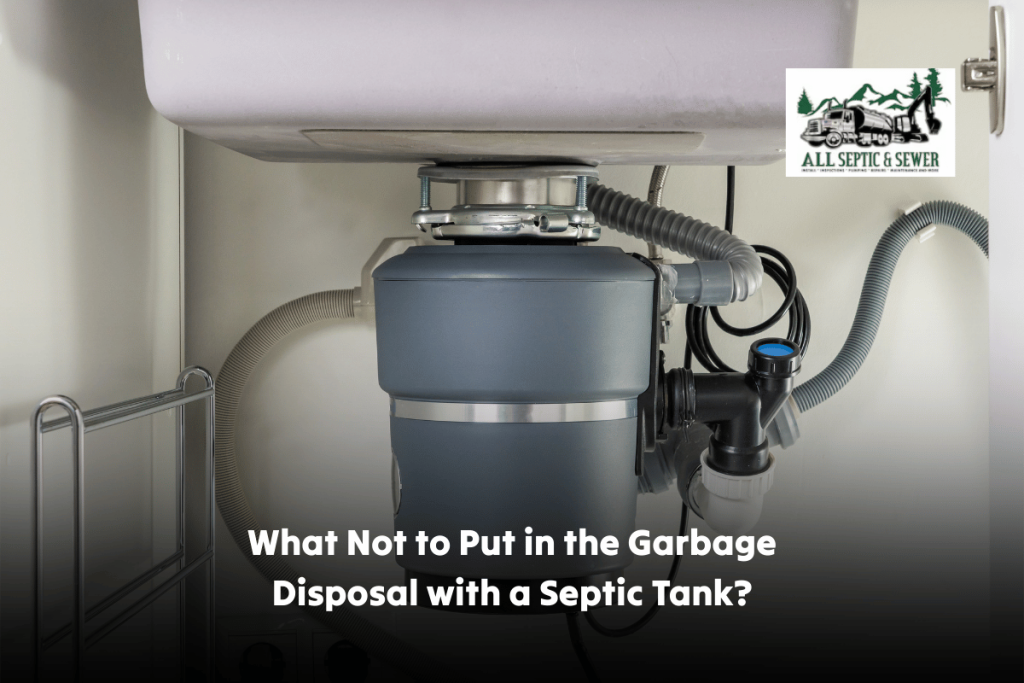
Many homeowners rely on a garbage disposal to quickly remove food scraps and manage everyday waste in the kitchen. While garbage disposals are convenient, they can create serious plumbing problems if your home uses a septic system. Understanding what not to put in the garbage disposal with a septic tank is essential to protect your septic system, prevent drain problems, and avoid expensive septic repair or sewer service.
A garbage disposal works by grinding food scraps into small particles before sending them through the drain and into the septic tank. Unlike municipal sewer systems, a septic system relies on natural bacteria to break down waste and maintain balance inside the tank. When the wrong materials are ground and flushed into the septic tank, the system becomes overloaded with solids and food waste.
For homeowners across King County, Pierce County, and Thurston County, proper waste disposal and septic maintenance are especially important. Septic systems must be carefully maintained to prevent drain issues, backups, and environmental contamination.
All Septic and Sewer Services provides professional septic services, septic maintenance, and septic pumping to help homeowners protect their septic systems and avoid costly septic repair.
How a Garbage Disposal Affects a Septic Tank
Garbage disposals and septic systems can work together when used responsibly. However, frequent disposal use increases the amount of food waste entering the septic tank.
How Septic Systems Process Household Waste
A septic system separates waste into three layers:
• Scum layer made of oils and grease
• Liquid wastewater that flows to the drain field
• Sludge layer containing solid waste
Bacteria inside the septic tank break down waste over time. The liquid then flows through the drain field where soil provides natural filtration before water returns to the environment.
How Garbage Disposals Increase the Load on Septic Systems
Garbage disposals grind food scraps into small particles. These particles move through the drain and enter the septic tank as additional solids.
When excessive food waste enters the tank, the sludge layer grows quickly and septic pumping may be required more often.
Why Food Waste Can Disrupt Septic Bacteria Balance
Too much food waste entering the septic system disrupts the natural bacteria that break down waste. This imbalance increases the likelihood of drain blockages, slow drains, and septic repair.
What Not to Put in the Garbage Disposal with a Septic Tank
Understanding what not to put in the garbage disposal with a septic tank helps homeowners protect both their garbage disposal and septic system.
Grease, Fats, and Cooking Oil
Grease, fats, and cooking oils should never go down the drain or garbage disposal. These substances cool and harden inside pipes, eventually blocking the drain.
Grease can also create a thick scum layer inside the septic tank that prevents proper waste breakdown.
Coffee Grounds and Tea Leaves
Coffee grounds may seem harmless, but they do not break down easily in septic systems. These grounds accumulate in the tank and contribute to sludge buildup.
Coffee grounds can also settle in pipes and cause drain problems.
Eggshells
Eggshells may grind inside garbage disposals, but they add unnecessary solid waste to the septic tank. The thin shell membranes can also wrap around disposal blades and affect performance.
Fibrous Foods and Vegetables
Fibrous foods are one of the most common causes of garbage disposal clogs.
Examples include:
• Celery
• Corn husks
• Onion skins
• Asparagus
Fibrous foods do not grind well and can wrap around disposal blades. They also break down slowly inside septic systems.
Pasta, Rice, and Bread
Starchy foods like pasta, rice, and bread absorb water and expand after entering the drain. This expansion can create thick sludge inside the septic tank.
Bones and Hard Food Scraps
Hard materials like bones cannot be fully ground by garbage disposals. Even when partially ground, the particles remain solid and contribute to septic tank buildup.
Potato Peels
Potato peels produce a sticky paste when ground in a garbage disposal. This paste can block pipes and clog drains.
Fruit Pits and Seeds
Fruit pits and seeds are extremely hard and can damage garbage disposals. These items should always be placed in the trash rather than the waste disposal system.
Large Food Scraps
Large food scraps add excessive solids to the septic tank and increase the risk of drain blockages.
Non Food Items and Chemicals
Certain materials should never enter garbage disposals or septic systems.
These include:
• Cleaning chemicals
• Plastic materials
• Paint or solvents
• Paper products
These items damage septic systems and disrupt waste breakdown.
Why Certain Foods Damage Septic Systems
Not all food waste behaves the same inside septic systems.
Foods That Break Down Slowly
Certain foods take longer to decompose inside the septic tank. These materials increase sludge buildup and require more frequent septic pumping.
Materials That Clog Pipes and Drain Fields
Grease, fibrous foods, and starches often collect inside pipes and drains. Over time they create blockages that prevent wastewater from flowing properly.
Items That Kill Beneficial Septic Bacteria
Harsh chemicals, solvents, and certain cleaning agents can destroy the bacteria that septic systems rely on to break down waste.
Garbage Disposal Dos and Don’ts for Homes with Septic Systems
Using garbage disposals responsibly helps reduce septic system strain.
Best Practices When Using a Garbage Disposal
Follow these simple guidelines:
• Grind only small food scraps
• Avoid grinding fibrous foods
• Reduce the amount of food waste entering the septic tank
Use Cold Water While Operating the Disposal
Always use cold water while operating garbage disposals. Cold water helps solidify grease so it can be flushed through the drain more easily.
Feed Small Amounts of Food Waste Gradually
Putting large amounts of food scraps into the disposal can overwhelm the system. Feed waste slowly to allow the disposal to grind properly.
Avoid Overusing the Disposal
Garbage disposals should supplement waste disposal, not replace trash or compost systems.
Schedule Regular Septic Maintenance
Routine septic maintenance ensures your septic system continues operating properly and reduces the risk of septic repair.
What Foods Are Safe to Put in a Garbage Disposal with a Septic Tank
Although many foods should be avoided, certain materials can be processed safely in small quantities.
Small Soft Food Scraps
Soft foods that break down easily can be ground in garbage disposals with minimal impact.
Citrus Peels in Moderation
Small citrus peels may help freshen garbage disposals, but they should not be used excessively.
Small Vegetable Fragments
Small vegetable scraps that grind easily are less likely to create septic system issues.
Soft Leftover Food in Limited Amounts
Soft leftovers can sometimes be processed safely if used sparingly.
Signs Your Septic System Is Struggling
Recognizing early warning signs helps prevent costly septic repair.
Slow Drains Throughout the Home
Slow drains often indicate waste buildup inside pipes or the septic tank.
Bad Odors Near Drains or Yard
Foul smells near drains or the drain field can signal septic system trouble.
Frequent Plumbing Backups
Backups in sinks, toilets, or drains usually indicate a failing septic system.
Standing Water Near the Drain Field
Pooling water in the yard often indicates that the septic tank or drain field is overloaded.
Gurgling Pipes
Air trapped inside pipes may cause unusual sounds when water flows through drains.
How Much Does Septic Pumping Cost in King, Pierce, and Thurston Counties?
Septic pumping is a critical part of septic maintenance.
Average Septic Pumping Costs in Washington
Most homeowners in Western Washington can expect the following approximate costs.
• Septic pumping $300 to $600
• Large septic tank pumping $500 to $900
• Emergency septic service $600 to $1,200
Factors That Affect Septic Service Pricing
Tank Size
Larger septic tanks require more time and equipment for pumping.
Frequency of Pumping
Homes using garbage disposals often need more frequent pumping.
Accessibility of the System
If the septic tank is buried deeply or difficult to reach, additional service work may be required.
Emergency Services
Emergency septic service calls may increase overall cost.
What Happens If You Put the Wrong Things in Your Garbage Disposal with a Septic Tank
Ignoring proper waste disposal guidelines can damage your septic system.
Increased Sludge Buildup
Grinding large amounts of food waste increases sludge accumulation inside the septic tank.
Drain Field Damage
Excess solids eventually travel to the drain field and block soil filtration.
Pipe Blockages
Grease and fibrous foods frequently clog drains and pipes.
Expensive Septic Repairs
Major septic repair or replacement can cost thousands of dollars.
Can You Use a Garbage Disposal with a Septic Tank Safely?
Many homeowners wonder if garbage disposals should be used at all with septic systems.
When Garbage Disposals Are Safe with Septic Systems
Garbage disposals can be used safely if homeowners limit the amount of food waste entering the septic tank.
When Homeowners Should Limit Disposal Use
Homes with small septic tanks or frequent food waste production may benefit from reducing disposal use.
How Professional Septic Maintenance Helps
Regular septic service and pumping help maintain proper septic system performance.
What Are the Best Ways to Protect Your Septic System?
Reduce Food Waste Going into the Disposal
Place large food scraps in the trash instead of the disposal.
Compost Food Scraps Instead
Composting food scraps reduces waste entering the septic system.
Avoid Harsh Chemicals and Cleaners
Use septic safe dish soap and cleaning products to protect beneficial bacteria.
Schedule Regular Inspections and Pumping
Routine septic maintenance and pumping help extend system life.
Why Professional Septic Maintenance Matters
Professional septic maintenance keeps systems operating efficiently.
Prevent Costly System Failures
Routine inspections identify issues before they require major septic repair.
Extend the Life of Your Septic System
Proper septic maintenance helps septic systems function effectively for decades.
Protect Groundwater and the Local Environment
Healthy septic systems prevent wastewater contamination.
Improve System Efficiency
Regular septic pumping and cleaning maintain system performance.
Professional Septic and Sewer Services in King, Pierce, and Thurston Counties
All Septic and Sewer Services proudly provides residential and commercial septic services across Western Washington.
Service areas include:
• King County
• Pierce County
• Thurston County
Cities served include Seattle, Tacoma, Puyallup, Lakewood, Olympia, Lacey, Kent, Federal Way, Auburn, and surrounding communities.
Our team provides septic pumping, septic maintenance, drain cleaning, sewer repair, and full septic service solutions.
Why Choose All Septic and Sewer Services
Homeowners and businesses trust All Septic and Sewer Services for reliable septic service and sewer service throughout Western Washington.
Our advantages include:
• Experienced septic professionals
• Reliable septic services and sewer repair
• Residential and commercial expertise
• Advanced equipment for septic maintenance and cleaning
• Fast response for urgent septic repair needs
We focus on protecting septic systems and ensuring efficient waste disposal for every customer.
Frequently Asked Questions About Garbage Disposals and Septic Tanks
Can Food Waste Damage a Septic Tank?
Yes. Excess food waste increases sludge buildup inside the septic tank and may cause drain blockages.
Are Garbage Disposals Bad for Septic Systems?
Garbage disposals are not harmful when used responsibly, but excessive waste disposal can strain septic systems.
How Often Should a Septic Tank Be Pumped if You Use a Garbage Disposal?
Homes with garbage disposals typically require septic pumping every one to three years.
Is Composting Better Than Using a Garbage Disposal?
Composting reduces the amount of food waste entering septic systems and is often recommended.
Can Grease Ruin a Septic System?
Yes. Grease hardens in pipes and tanks, leading to severe drain blockages and costly septic repair.
Schedule Septic Service with All Septic and Sewer Services
Protecting your septic system begins with proper waste disposal habits. Knowing what not to put in the garbage disposal with a septic tank helps prevent drain issues, costly septic repair, and unnecessary septic maintenance.
All Septic and Sewer Services provides expert septic services including septic pumping, septic maintenance, sewer service, drain cleaning, and septic repair for homeowners and businesses across King County, Pierce County, and Thurston County.
If your septic system needs inspection, maintenance, or repair, contact All Septic and Sewer Services today. Our team proudly serves Seattle, Tacoma, Puyallup, Lakewood, Olympia, Lacey, Kent, Federal Way, Auburn, and surrounding Washington communities. We are committed to keeping your septic system and waste disposal systems working safely and efficiently.